December 11, 2009

DECEPTION AND THE CONSUMER FRAUD ACT - PART II

Thus, if a seller of an automobile says that the vehicle has not been in an accident, in fact it has been in an accident, that is an affirmative misrepresentation of fact which is false and inherently has the capacity to mislead a potential purchaser of the vehicle. This should be an actionable representation contemplated under the New Jersey Consumer Fraud Act for which the plaintiff would be entitled to damages if a case was proved. There are other ways to prove a consumer fraud under the New Jersey Consumer Fraud Act where good faith might be a defense. As an example, if a plaintiff is claiming a material omission of fact, the plaintiff would be required to prove intent to pursue a claim under the New Jersey Consumer Fraud Act. However, when the plaintiff is alleging an affirmative misrepresentation of fact, good faith is not a defense. As an example, if a dealer were to state that a vehicle was not in an accident and in fact was in an accident, even though they were relying upon a CARFAX or other industry accepted databases or documentation, they would not have a valid defense under the New Jersey Consumer Fraud Act.

As an example, there is a case under New Jersey law called Cuesta v. Classic Car. In this specific case, the seller of an automobile sold a vehicle with an inappropriate or improper odometer reading. The Court held that the improper odometer reading created a ‘misrepresentation of fact’ which was actionable under the New Jersey Consumer Fraud Act. Dealer claimed they were unaware of this rollback, however, this is not deemed a valid defense. This is consistent with the liberal interpretation of the New Jersey Consumer Fraud Act and the decision by the legislature to place the burden on a business to make sure that the product that they sell is in fact consistent with any representations set forth by the selling dealership or business.

A consumer should be able to rely upon the representations from the business since they are the experts in the field in which the consumer is dealing. It is an entirely separate post to quantify the amount of loss where the appropriate procedure or guidelines for pursuing a claim for consumer fraud under the New Jersey Consumer Fraud Act. However, this post just demonstrates types of claims which can be sued and the obligations upon a business when selling a vehicle product or other consumer goods.

September 28, 2009

Car Dealership Fraud and Appearance Packages

Appearance Package, Wheel Well Molding, Door Edge Guards


Some dealerships use the sale or attempted sale of door edge guards, wheel well molding or pin striping commonly known as appearance packages to increase the costs of the vehicles. Frequently, these pre-delivery services are not included anywhere in the buyer’s order but only on a price addendum placed on the automobile. New Jersey law is relatively straightforward and requires a consumer to sign off and acknowledge the purchase of any pre-delivery services on the sale of an automobile. Dealership uses the guise of these expensive products. These products increase the “sticker” price of a vehicle. When the customer sits downs and looks all the paperwork, it is not apparent that these items are included the price anywhere. This is the intention behind the New Jersey Consumer Fraud Act and the associated Administrative Code regulations requiring consumers to acknowledge purchase of pre-delivery services. Even if these were considered aftermarket items or different types of products, it would still be appropriate for the dealer to disclose the nature and extent of these products, any warranties that were associated with these products and the costs thereof. Best advice would be to be very careful in the injunction of negotiating a purchase price on a new vehicle and demand for an itemization of any and all products and/or services that you are acquiring or think you are acquiring as part of the automobile purchase. The dealership is required to disclose this to you fully and honestly and the best way to do this would be to bring a piece of paper where the dealership would sign off on the specific products which you are purchasing. This would forego any potential confusion and document exactly what you are and are not purchasing.

August 28, 2009

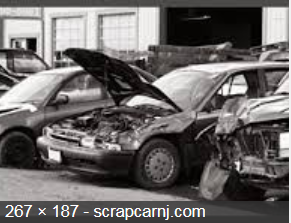
DAMAGED AND FRAME-DAMAGED CARS

DAMAGED AND FRAME-DAMAGED CARS

It is a common question that is asked frequently. Is a seller of a motor vehicle or an automobile have the obligation to disclose that the vehicle was damaged even slightly, less than frame damage? Is there a separate obligation based on the nature and extent of the damage? Is it relevant that there was frame damage? The New Jersey law in the subject is mostly a matter of common sense. If the seller of an automobile or vehicle knows that a vehicle was damaged, he has the obligation to make material disclosures to the person to whom he is selling the car if he thinks that the disclosure of the information would make a difference in the purchasing decision. This is what makes a material disclosure relevant.
There are certain exceptions to this rule for the disclosure of damages on damaged cars where the legislator has promulgated or passed various laws requiring certain disclosures. As an example, New Jersey law requires disclosure of advertised automobiles where there is damage in excess of $1,000. This number varies by state. Nonetheless, the New Jersey Consumer Fraud Act has taken the more ethical approach and applied it to the sale of goods. The law in the State of New Jersey is no longer buyer beware but rather seller beware. Therefore, the seller of an automobile has the obligation to make sure that all representations pertaining to the sale of specific automobile are correct. As an example, if the seller tells a buyer that a vehicle has not been damaged, has not been in an accident, is in good shape or makes certain representation as to the condition of the vehicle, he has an obligation to make sure that this representation is true and accurate. The New Jersey Consumer Fraud Act does not have any intent requirement for affirmative misrepresentations. This means that if a seller of an automobile says the vehicle has not been damaged or has not been in an accident and ultimately it turns out that the vehicle was in an accident despite the seller of the automobile not being aware of same, there is liability under the New Jersey Consumer Fraud Act which applies triple damages, attorney fees and costs.
It is safe to assume that if you are not sure do not state what the condition of the vehicle is, but if you do know you are obligated to make such disclosures. It would not be appropriate to intentionally look away from various portions of the car so as to hide relevant condition from the seller’s own knowledge.

August 8, 2009

WAIVER OF CONSUMER FRAUD CLAIMS AND CONSUMER ARBITRATION

WAIVER OF CONSUME FRAUD CLAIMS AND CONSUMER FRAUD

The litigation in this case arises out of the plaintiff’s allegations that the defendant committed fraud and consumer fraud with regard to the performance of a home improvement contract. See Cox v. Sears, 92 N.J. 1 (1994). The defendant now relies upon arbitration clause and move to have the case dismissed. The arbitration clause provides the following:
Any dispute, controversy or claim arising out of or relating to this contract at the option of Care Temp may be submitted to binding arbitration with the American Arbitration Association and judgment on award may be entered in any amount entered in any court or company jurisdiction
The arbitration clause as written is unenforceable under New Jersey law as promulgated by the New Jersey Supreme Court. In Garfinkel v. Morristown Obstetrics and Gynecology Associates, 168 N.J. 124 (2001), the court refused to enforce an arbitration agreement because the arbitration agreement failed to specifically include a waiver of statutory rights. The Supreme Court held that without the specific waiver of statutory rights, the agreement could not be said to encompass those statutory rights in the context of an arbitration clause. In Garfinkel, the court refused to force the plaintiff to arbitrate their statutory law against discrimination claims because the arbitration agreement specifically failed to include a waiver of statutory rights.

July 8, 2009

Where Can you Sue a Car Dealership?

Under the relevant due process inquiry, the forum state's exercise of jurisdiction must be reasonable, which is measured by the “minimal contacts” doctrine, a threshold requirement for specific personal jurisdiction. Hanson v. Denckla, 357 U.S. 235, 251, 78 S.Ct. 1228, 1238, 2 L.Ed.2d 1283, 1296 (1958); International Shoe v. Washington, 326 U.S. 310, 66 S.Ct. 154, 90 L.Ed. 95 (1945); Waste Management, supra, 138 N.J. at 119-20, 649 A.2d 379; Lebel, supra, 115 N.J. at 322, 558 A.2d 1252. Minimal contacts requires “that there be some act by which the defendant purposefully avails itself of the privilege of conducting activities within the forum State, thus invoking the benefits and protections of its laws.” Hanson, supra, 357 U.S. at 253, 78 S.Ct. at 1240, 2 L.Ed.2d at 1298. Under a specific jurisdiction analysis, the minimum contacts inquiry must focus on “the relationship among the defendant, the forum, and the litigation.” Shaffer v. Heitner, 433 U.S. 186, 204, 97 S.Ct. 2569, 2579, 53 L.Ed.2d 683, 698 (1977); Lebel, supra, 115 N.J. at 323, 558 A.2d 1252.

In applying the “minimum contacts” test, we focus on the relationship among the defendant, the forum, and the litigation. The “minimum contacts” requirement is satisfied so long as the contacts resulted from the defendant's purposeful conduct and not the unilateral activities of the plaintiff. This “purposeful availment” requirement ensures that a defendant will not be haled into a jurisdiction solely as a result of random, fortuitous, or attenuated contacts. The question is whether the defendant's conduct and connection with the forum State are such that he should reasonably anticipate being hauled into court there. Lebel v. Everglades Marina, Inc., 115 N.J. 317, 323-24, 558 A.2d 1252 (1989)

Both the Appellate Division and the New Jersey Supreme Court have held that the seller of retail goods in another state is subject to the jurisdiction of the State of New Jersey. The Supreme Court specifically held in Lebel v. Everglades Marina, Inc., 115 N.J. 317 (1989) that, “In comparison, the marketer of a big ticket luxury item that accomplishes the sale by solicitation of out of state buyer in the buyer’s state can fairly be expected to contemplate that a breach of contract will expose it to a suit in the forum of the buyer. We thus find this does not offend our notions of substantial justice and fair play to ask the seller of this special order, Luxury Vessel to account for its negotiations of the transaction in a New Jersey court”
In Accura Ziesel Machinery Corp. v. Timco Inc., 305, N.J. Super, 559 (App. Div. 1997), the Appellate Division held that a seller of goods in the State of Tennessee is subject to the jurisdiction in the State of New Jersey by placing their goods in the stream of commerce accompanied by other contacts with the State of New Jersey.

May 25, 2009

Lemon Law and Bankruptcy: What to Do?

What is a consumer to do when a major manufacturer declares a bankruptcy?


Many people are asking this question in light of the anticipated bankruptcy of General Motors and the currently filed bankruptcy of Daimler Chrysler. Many consumers and vehicle purchasers feel that they are without an option with regard to making a claim for breach of warranty or Lemon Law under New Jersey or any other law. There are various other claims associated with the sale of a vehicle which do not necessarily require the presence of the manufacturer as the defendant. There are various claims which a purchaser of a vehicle can make against the seller of a vehicle. In the case which the seller and the manufacturer are bankrupt and there are still remaining claims against the finance company, assuming it was financed through the selling dealership. Quite frequently, the finance companies are holders of the retails on the sales contract and are subject to the holder rule. The holder rule requires that the holder of the paper, usually a finance company, is subject to all claims that the purchaser of the automobile will have against the seller. In addition, the holder of the paper would have all the defenses that the seller of the automobile would have.
So hypothetically, if an individual were to purchase a vehicle from a Chrysler dealer and the dealer was still on business, the plaintiff would have most of his claims against the selling dealer as well as the finance company, if the appropriate steps were taken. The exception to this would be the Lemon Law claim since New Jersey Lemon Law applies to new car dealers only. There are various other theories which could potentially be made against the finance company which have been demonstrated by New Jersey case law. In Lotito v. Mercedes Benz, the court held that because of the close proximity and nature of identities between the finance company and the manufacturer, the plaintiff in essence has the same or substantially similar claims against the finance company as it would against the manufacturer due to the nature and extent of the relationship between these parties.

Continue reading "Lemon Law and Bankruptcy: What to Do?" »

April 9, 2009

CAR DEALERSHIP SELLS CAR TO TWO BLIND PEOPLE.

CAR DEALERSHIP SELLS CAR TO TWO BLIND PEOPLE.

This is not a joke. It is true.

The names will withheld until suit is filed BUT today I saw, possibly, the worst case in the many years that I have been doing this type of work.

Both of my clients are legally blind. The primary obligor and the cosigner. They do not even have a driver’s license nor are the permitted to drive. The dealership even got the car registered and insured. The customer was at the dealership with his cane and his glasses. When they told me the story it was hard to believe. They are both legally blind.

To make matters even worse the car is a mess. It looks like it was in a prior accident with a different hood and various parts are melted on the interior of the car. They were told the car had only one prior owner when it had two.

The following are the causes of action (theories of liability) against the dealer and/or the lender.

• Consumer Fraud-deceptive conduct. Cox v. Sears.
• Fraud
• Breach of contract
• Breach of good faith and fair dealings. Wilson v. Hess
• Revocation. Cuesta v. Classic
• Negligence
• Discrimination against disabled persons, the blind. Law against discrimination.
• Declaratory relief that the contract is void ab initio (from the beginning)

Continue reading "CAR DEALERSHIP SELLS CAR TO TWO BLIND PEOPLE." »

March 13, 2009

Consumer Fraud: Misrepresentations

Consumer Fraud: Misrepresentations

What is a misrepresentation under New Jersey's Consumer Fraud Act:

An “affirmative act” is something done voluntarily by a person. It includes not merely physical acts, but also any steps taken voluntarily by a person to advance a plan or design, or to accomplish a purpose. “False promise” is an untrue commitment or pledge (which is communicated to another person) to create the possibility that that other person will be misled. Model Civil Jury Charge 4.43 http://www.judiciary.state.nj.us/civil/charges/4.43.pdf The defendant’s intent is not pertinent as good faith is not a defense to an affirmative representation. Cox v. Sears, 138 NJ 1, 16 (1994).

There are many cases that address what is considered ocnsumer fraud under New Jersey law.

The following are examples of affirmative representation that were actionable.
A cellular service provider’s advertisement that its service was so reliable that “you could make your wireless phone your only phone” Union Ink Company v. ATT Corp, 352 N.J.Super 617, 644 (App.Div 2002). A real estate agent’s statement that the termite problem was minimal when it was not. Byrne v. Weichert Realtors, 290 N.J.Super 126, 134 (App.Div 1996). Misrepresenting the mileage on a Corvette. Cuesta v. Classic, 358 N.J.Super 512 (App.Div. 2003). See also Cogar v. Monmouth Toyota 331 N.J.Super 137 (App.Div 1997)(odometer case)

In Ji v. Palmer, 33 N.J. Super. 451 (App. Div 2000) the sellers agent of a certain apartment building represented to the purchasers that the certificate of occupancy was sufficient to rent the unit as a multi family when in fact the unit was zoned single family and could not be utilized as a multi family dwelling. It was admitted that this was a mistaken belief by the seller’s agent but was determined to be actionable. The Appellate Division specifically determined that the seller’s agent intent was irrelevant under the CFA.

Carton and Rudnick family law
Carton and Rudnick consumer law
Carton and Rudnick


February 22, 2009

What is UDAP? What is Consumer Fraud?

What is UDAP?

Unfair and deceptive Practices Acts. The New Jersey Consumer Fraud Act would be considered a UDAP statute. The purpose is to assist consumers in battling fraud in the market place and provides several protections top consumers that are meant to encourage consumers to bring suit and attract competent lawyers to litigate the cases. The UDAP statutes include provisions for tripled damages, attorney fees and injunctive relief. The State AG's office is also permitted to bring suit under the Consumer Fraud Act.

The UDAP statutes vary significantly by State, with some providing more protection that others. There is a published report indicating the strength and weaknesses of all the statutes for all of the 50 states. The report indicates that Michigan and Rhode Island are the two weakest statutes because the courts have interpreted tham to cover almost no transactions.

Carton and Rudnick family law
Carton and Rudnick consumer law
Carton and Rudnick

Continue reading "What is UDAP? What is Consumer Fraud?" »

February 16, 2009

Consumer Fraud and Buying a Car

The fear of buying a car

Many people have a fear of having to go to a dealership and purchase or lease a car. There are so many pitfalls. How do you get answers to important questions? Where did the dealership get the car? What did they do to it to get it ready for sale? Did they really inspect the car and what did they find in that inspection? These are basic safety issues and concerns that need to be answered. It is very important to get accurate answers to these questions. There is almost no option except to trust the dealership. Remember that you are dealing with the salesman not the service department. Can you really get an accurate answer?

After these most basic questions are answered you still have to be concerned about the financing and the terms of the transaction for the purchase either lease or purchase. As an example what is the best interest rate available, what are the real terms of the financing? What are the products that are being packaged with the vehicle? What is GAP and what are the terms of the coverage? What is the real cost? You need to ask all of these questions and get answers in writing, if possible.

The best thing to do is get everything in writing and do you research as best you can. Do a CARFAX and also try to get you own financing? Ask a lot of questions to feel the salesman out and don’t get timid when you need a question answered or you are not sure.

There are many New Jersey cases that demonstrate examples of the type of conduct might be determined to be consumer fraud or auto fraud.(each case turns on its own set of facts)

Delany v. Garden State Auto Mall: The dealer sold products without full disclosure.

Romano v. Galaxy: Violation of Federal Odometer Law

Cuesta v. Classic: Odometer Roll Back

Sema v. Automall : Misrepresenting the vehicle as new when it was a demo


Carton and Rudnick family law
Carton and Rudnick consumer law
Carton and Rudnick


Continue reading "Consumer Fraud and Buying a Car" »

January 20, 2009

What If A Major Auto Manufacturer Closes the Doors?

What If A Major Auto Manufacturer Closes the Doors?

This is a very good question, is merely speculation BUT I am asked the question on a daily basis. There is really no precedent for making an analysis. But form the consumer's prospective the issues are simple.

Who will service my car, honor the warranty and where will I get the parts to fix my Chrysler?

There are no easy answers BUT as with any business that goes belly up, generally the consumers are left in the cold, which is the most likely occurrence.

My guess is that one of the other manufacturers would try to make some arrangement to get the customers of the failing automaker. But if you had a lemon law claim you are probably out of luck, unless the State sets aside a fund, which is unlikely in this economy.

Carton and Rudnick family law
Carton and Rudnick consumer law
Carton and Rudnick

January 17, 2009

Consumer Fraud: Do You Need A Price Tag?

Consumer Fraud: Do You Need A Price Tag?

The New Jersey Consumer Fraud Act has a specific provision for "price tags"

56:8-2.5. Sale, attempt to sell or offer for sale of merchandise without tag or label with selling price

It shall be an unlawful practice for any person to sell, attempt to sell or offer for sale any merchandise at retail unless the total selling price of such merchandise is plainly marked by a stamp, tag, label or sign either affixed to the merchandise or located at the point where the merchandise is offered for sale.

The reasonable reading is that the price has to be where it can be seen, which is on the product. This is only fair. The failure to have this information on the product can give rose to a number of deceptive tactics.


Carton and Rudnick family law
Carton and Rudnick consumer law
Carton and Rudnick

Continue reading "Consumer Fraud: Do You Need A Price Tag?" »

January 14, 2009

What is Spot Delivery? Is it Auto Fraud?

What is Spot Delivery?

Spot delivery is when a dealership lets you have a car until financing is approved. Under many circumstances this is improper. What happens when:

They sell the trade before the financing is approved?

Ask for more money?

Change the interest rate?

Ask for their car back?

Do not deliver title?

Do not provide documents?

Repossess the car they gave you?

Threaten you with repossession or reporting to the police if you do not return the car?


These are many of the things that can go wrong and you will need an experienced lawyer who can answer your questions.

Carton and Rudnick family law
Carton and Rudnick consumer law
Carton and Rudnick

Continue reading "What is Spot Delivery? Is it Auto Fraud?" »

November 23, 2008

Ford and GM need help!

What is the status of the auto industry?

There are strong arguments on both sides for the failure of the GM or Ford. 239,000 people are directly employed by the big three. My only question is whether the problems experienced by the big three is the problem or a symptom of the overall ecopnomy?

Carton and Rudnick family law
Carton and Rudnick consumer law
Carton and Rudnick

November 20, 2008

Pushy Car Salesman: A Myth?

Pushy Car Salesman: A Myth?

Wards online is a site that I follow on a regular basis. It is an auto industry site and it concentrates on the problems and issues of the auto industry. There are great articles and gives an terrific insight as to what is going on in the industry, such as the possible merger of GM and Chrysler.

But there was a "study" that was done and it reported that respondents to the survey report that they were not oversold. Is this your experience? Do you think this survey is credible?

If this was really true why would they do a study to prove it?

Carton and Rudnick family law
Carton and Rudnick consumer law
Carton and Rudnick

November 17, 2008

Gift Card Fraud and Consumer Fraud

Gift Card Fraud

Gift Cards are a big business, over 18 billion dollars per year. Certain fees are prohibited under New Jersey Law.

Any fees must be disclosed by the retailer when the card is purchased. Certain fees, such a dormancy fees can only be charged after 24 months of inactivity and max out at $2.00 per month.

If you think that you have been charged fees improperly please contact our law firm

Interview on Gift Card Fraud

Most popular gift cards.

Gift card scams.

Carton and Rudnick family law
Carton and Rudnick consumer law
Carton and Rudnick

Continue reading "Gift Card Fraud and Consumer Fraud" »

November 14, 2008

Wachovia Corp Settlement

Wachovia Settlement

It appears that Wachovia Corp settled for up to $125 million for the following

The telemarketers then used that information to write checks to themselves, purportedly from the consumers they had called. These checks did not require a signature from the accountholder; instead, the signature block included text such as "authorized by your depositor, no signature required."

Carton and Rudnick family law
Carton and Rudnick consumer law
Carton and Rudnick

November 12, 2008

Hotel Charges that are Fraudulent

Hotel Charges that are Fraudulent. Many business such as hotels are looking for shortcuts by charging, without notice, for many supposed services.. The following are things that you should look for in any hotel stay.

Mandatory bellman charges:
Fees for cancellation
Fees for holding bags
Fees for early departure
Fees for energy surcharges
Fees for handling FEDEX packages
Fees for faxes
Fees for in room safes
Fees for the internet
Minibar fees for restocking
Amenity fees
Phone surcharges

Carton and Rudnick family law
Carton and Rudnick consumer law
Carton and Rudnick


Continue reading "Hotel Charges that are Fraudulent" »

November 9, 2008

New Jersey Division of Consumer Affairs

New Jersey Division of Consumer Affairs

The State has a great site dedicated to Lemon Law in the State of New Jersey.

There is a list of publications at the Division of Consumer Affairs site.

File a complaint

Licensing Board information.

Division of civil rights

Carton and Rudnick family law
Carton and Rudnick consumer law
Carton and Rudnick

November 6, 2008

New Jersey Lemon Law

New Jersey Lemon Law

Are there any specific requirements under the New Jersey Lemon Law to send a letter to a Manufacturer before you either file suit or request a hearing before an administrative Judge.

If you file a claim in Superior Court the answer is no, there is no requirement to send a letter to the manufacturer. But if you do send the letter there is a presumption that the vehicle is a lemon.

If you file a request for an administrative hearing you are REQUIRED to send the pre suit letter otherwise the court will not hear your claim.

Carton and Rudnick family law
Carton and Rudnick consumer law
Carton and Rudnick